7 Ways Of How To Practice Drawing & Stay Motivated
It’s a setback every artist knows: the initial thrill of learning how to draw faces has worn off, and you’ve been practicing diligently for weeks, maybe even months. But when you look at your work, a sinking feeling sets in. You’re stuck, your drawings don’t seem to be getting any better and you’ve hit the dreaded artist’s plateau. This is the point where passion can curdle into frustration, and the temptation to quit feels overwhelming. If you’re standing on this plateau right now, take a deep breath because you are not alone, and you are not a failure. In fact, you’re simply experiencing a normal, and even necessary, part of learning how to practice drawing.
Your Motivation For How To Practice Drawing
Public radio host Ira Glass famously described this as the “Taste Gap.” It’s the gap between your taste, which is excellent (you know what good art looks like), and your current skill level. This gap is where frustration lives, but the plateau isn’t a wall; it’s a sign. Also, it’s a signal that it’s time to change how you practice, not just how much. This guide will give you 7 actionable strategies to shatter that plateau, reignite your motivation, and start seeing the tangible progress you’ve been working so hard for.
Strategy #1: Diagnose Your Weakness – Stop Practicing Blindly
Honestly, practicing drawing for the sake of practicing is like driving without a destination. In other words, you’re moving, but you’re not getting anywhere. To break through a plateau, you need to practice drawing with precision. You must become a detective and diagnose the specific weakness that’s holding you back.
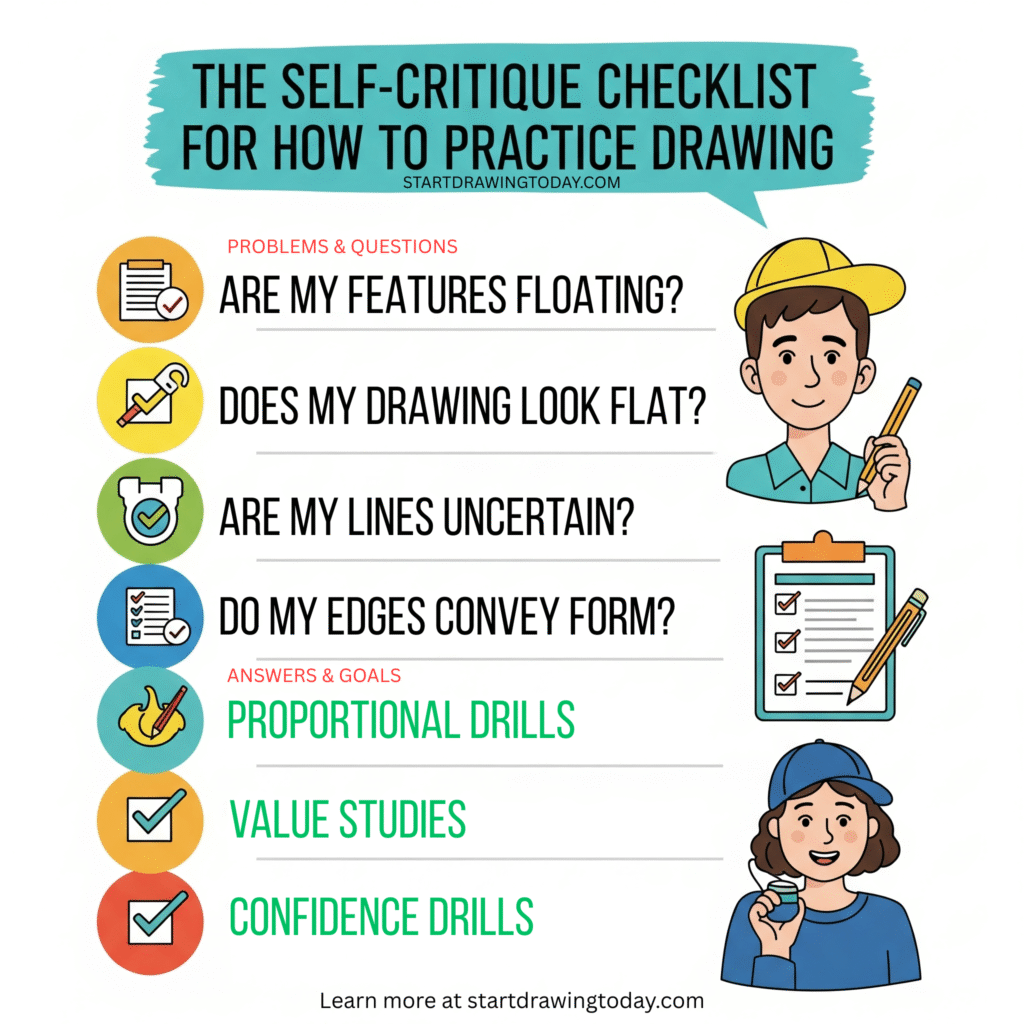
The Self-Critique Checklist For How To Practice Drawing
Firstly, take one of your recent drawings that you’re unhappy with and analyze it with an objective eye. Ask yourself specific questions related to it’s quality such as:
•Proportions: Are the eyes too high, is the nose too long or is the head shape correct?
•Value: Does the drawing look flat, or am I using a full range of tonal values (from light to dark)? Or perhaps my shadows just appear as muddy smudges?
•Line Quality: Are my lines scratchy and uncertain, or are they confident and clean?
•Perspective & Form: Do the features feel like they are wrapping around a 3D head, or are they pasted on a flat surface?
By identifying the specific visual problem of your drawing, you can target what you need to practice on. In addition, if your proportions are off, you need to do proportion drills. Plus, if your values are weak, you need to work on some value studies.
How to Ask for Effective Feedback
Truthfully, asking for feedback online can be terrifying, but it’s invaluable if you do it right. Don’t just post your drawing and ask, “What do you think?” Unfortunately, you’ll get generic compliments or unhelpful criticism with that approach. Instead, ask for specific feedback based on your self-critique such as “I’m struggling with making the nose feel 3D in this portrait. Do you have any advice on how I could improve the shading in that area?” As a result, you’re more likely to receive constructive, actionable advice.
Strategy #2: Go Back to Basics – Rebuild Your Foundation
Secondly, identify and return the the basics of how to practice drawing. Often, a plateau is a symptom of a shaky foundation. You may have rushed ahead to drawing cool portraits without truly mastering the fundamentals. Rest assured, it’s never too late to go back and solidify your core skills. It might not feel as exciting as drawing a finished piece, but it’s the fastest way to long-term improvement.
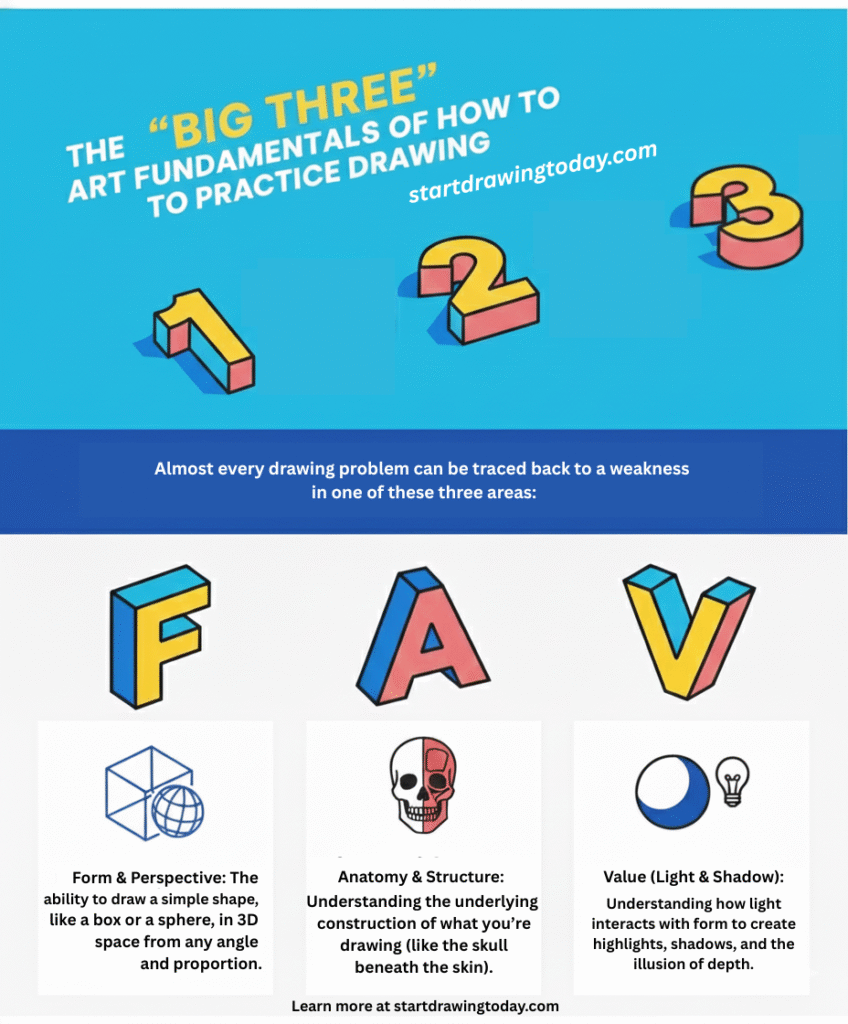
The “Big Three” Art Fundamentals of How To Practice Drawing
Almost every drawing problem can be traced back to a weakness in one of these three areas:
1. Form & Perspective: The ability to draw a simple shape, like a box or a sphere, in 3D space from any angle and proportion.
2.Anatomy & Structure: Understanding the underlying construction of what you’re drawing (like the skull beneath the skin).
3.Value (Light & Shadow): Understanding how light interacts with form to create highlights, shadows, and the illusion of depth.
Bear in mind, a weakness or oversight in any one of these methods of how to practice drawing will hold you back indefinitely. It’ll also hinder your ability to create realistic portrait drawings.
The 15-Minute Fundamental Drill
Make it a habit to start every single drawing session with a 15-minute warm-up focused on one fundamental. Don’t aim for a pretty drawing, just fill a page with cubes in perspective. The next day, fill a page with spheres and practice shading them with your pencil then the day after, do 15 minutes of quick gesture drawings. In time, this consistent, low-pressure practice will strengthen your foundation as an artist.
Strategy #3: Introduce “Deliberate Practice” – How To Practice Drawing with a Purpose
Thirdly, there’s a difference between just drawing and “deliberate practice.” In fact, deliberate practice is defined as focused, goal-oriented actions of an artist. Practice is designed to push you just outside your comfort zone, which is where real growth happens.
Setting Micro-Goals for Each Session
In learning how to practice drawing, set a tiny, specific, achievable goal. Keep in mind, at this time your goal is not “draw a good portrait.” Rather, it’s “Today, I will draw five heads, and my only goal is to correctly place the ear in relation to the eyebrow and nose.” Hence, you make the learning process manageable and build confidence with each small victory.
The Power of Timed Exercises
Fortunately, timed exercises are a fantastic tool for deliberate practice. Try doing a series of 2-minute gesture drawings of faces without worrying about details or perfection. Take this opportunity to focus on the most essential information: the angle of the head, the main shapes, the overall energy. With practice, these exercises train your brain to see more efficiently and make more confident decisions.
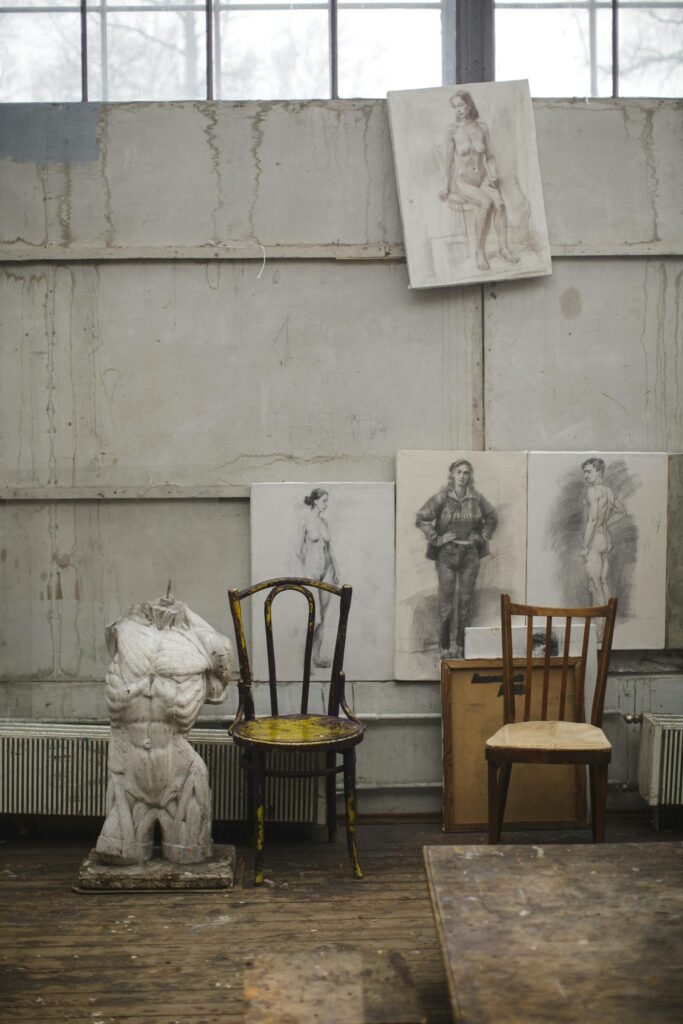
Strategy #4: Change Your Environment – Your Brain Needs Novelty
Fourthly, If you practice drawing in a repetitive manner without growth, you may eventually reach a point of stagnation. To kickstart new growth, introduce novelty and force your brain to solve new problems.
Learn How To Practice Drawing With a New Medium
If your stuck to using graphite pencils, push yourself to pick up some charcoal or an ink pen. On the contrary, If you’re a digital artist, try a new brush or even grab a cheap watercolor set. Diversity of mediums is a major step in my growth as an artist. In my experience, a new medium offers different properties and will force you to adapt your drawing technique. You’ll discover new ways of linework and approaching your artwork to bring back to your preferred medium.
Draw from Life, Not Just Photos
Drawing from a photograph is a useful skill, but drawing from a live, 3D object is a completely different experience. By nature, your eyes can pick up subtle shifts in light and form that a camera cannot. For example, set up a simple still life model on a desk of small household items. In addition, go to a coffee shop and sketch the people around you (discreetly!). Or, be your own model and draw a self-portrait looking in a mirror. Collectively, these are all powerful ways to level up your observational skills.
Strategy #5: Curate Your “Art Diet” – Stop the Comparison Game
Fifth, we have access to endless inspiration in the digital age, but it’s a double-edged sword. Moreover, that inspiration can quickly turn into a soul-crushing comparison that kills your motivation. Therefore, you must take control of your online “art diet” by using discretion in your social media consumption.
The “Inspiration vs. Intimidation” Test
Scroll through your social media feed and as you observe each artist’s work, pay attention to how you feel. Honestly, do you feel excited, energized, and eager to go draw, or do you feel small, inadequate, and intimidated? In your self-critique in reaction to social media, be ruthless. Aggressively unfollow or mute any account that consistently makes you feel bad about yourself. Above all, your mental health is more important than worrying about their follower count.
Follow for Learning, Not Just for “Likes”
Like Reddit groups, seek out artists who share their process, their struggles, and their educational content. Follow teachers and creators such as myself who break down complex topics. Plus, fill your feed with content that helps you grow, not content that just shows off a flawless finished product. Surprisingly, this transforms social media from a source of anxiety into a powerful learning tool.

Strategy #6: Document Your Journey – Create Proof of Your Progress
Sixth, progress in learning how to practice drawing is like watching grass grow—it’s often too slow to see day-to-day. In turn, it can make you feel like you’re not improving at all. Sixth, you must create a tangible record of your journey.
The “Draw This Again” Challenge
Go through your sketchbook right now and find a drawing you’re semi-proud of but know you could do better. Date it, put it away then, in six months or a year, draw it again. In comparison, you will be shocked at your improvement in those six months. It’s a way to achieve undeniable proof that your practice is paying off.
Keep Everything (Even the “Bad” Drawings)
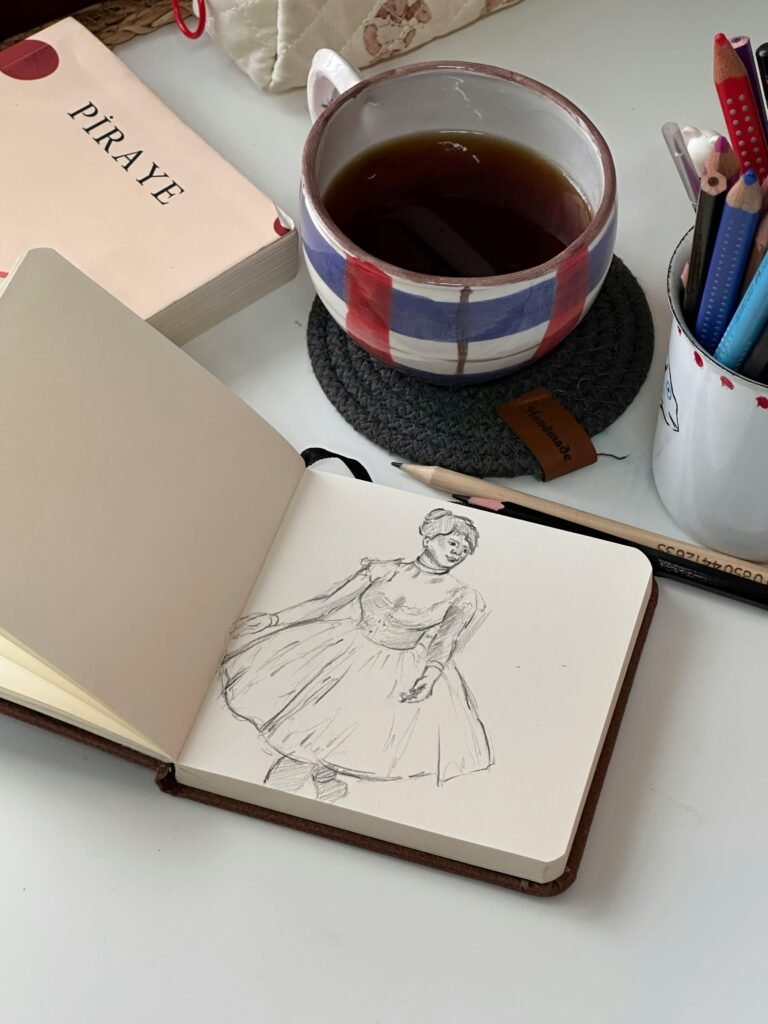
Your sketchbook is not a gallery; it’s a laboratory and a record of your experiments, your failures, and your breakthroughs. By rule, never tear out a page and be sure to date every drawing which you create. When you’re feeling down, flip back to the beginning of your sketchbook. Within time, the progress you discover in learning how to practice drawing will be highly motivational.
Strategy #7: Redefine “Success” – Fall in Love with the Process
Seventh, if you define success as “creating a perfect drawing,” you will be miserable for most of your artistic journey. Unfortunately, you are tying your self-worth to an outcome that is often out of your control by adopting this mentality. Instead, humble yourself because learning how to practice drawing is about falling in love with the process.
The “Process, Not Product” Mindset
Instead of a product-oriented goal like, “I will create a masterpiece today,” set a process-oriented goal like, “I will draw for 30 minutes today” or “I will fill one page of my sketchbook with studies.” Before you know it, you have 100% control over whether you achieve a process goal. Process-orientation builds consistency and removes the pressure to be perfect every time.
Find the Fun Again In How To Practice Drawing
Most importantly, remember why you started drawing in the first place. Most likely, it was probably because it was fun! With that perspective, set aside a time to draw without any pressure to improve. Draw your favorite cartoon characters or, invent silly monsters and/or experiment with bright colors. Let your creativity flow freely and doodle with no particular purpose. This “play” is not a waste of time; it’s essential for preventing burnout and keeping your creative spark alive.
Conclusion: How To Practice Drawing
In conclusion, the artist’s plateau is not a prison sentence; it’s a crossroads. It’s a sign that you’ve grown as much as you can with your current methods and you’re ready for a new, more focused approach. By diagnosing your weaknesses, practicing deliberately, curating your influences, and learning to love the journey itself, you will not only break through your current plateau but will be equipped to conquer any future ones you encounter. Overall, be kind to yourself, trust the process, and keep showing up to the page.
Which of these strategies are you going to try this week? Let us know in the comments and let’s break through this plateau together!
Leave a Reply