Drawing From Imagination: How To Go From Copier to Creator
Every artist dreams of it: sitting down with a blank page and, with a few effortless strokes, bringing a character from the depths of their imagination to life. It’s the ultimate expression of creative freedom, but for so many of us the reality is a frustrating cycle of feeling chained to reference photos. Typically, the moment the reference is gone, we feel lost as an artist. Also, we’re plagued by “same face syndrome,” our drawings look anatomically bizarre, and we’re left feeling like frauds, not “real” artists. If this sounds painfully familiar, I have good news: drawing from imagination isn’t a magical gift. In fact, it’s a skill, and it’s a skill you can build.
The Big Misconception: “Drawing from Imagination” is a Lie
Let’s get one thing straight: no artist creates in a vacuum. Truthfully, the masters of art that you admire who seem to pull flawless characters out of thin air are not using magic. They are accessing a vast, meticulously organized mental library filled with thousands of hours of observation and study. In general, they have drawn, deconstructed, and analyzed so many faces that the fundamental components of portraiture are etched into their minds.
You Can’t Draw What You Don’t Know
Think of it like this: you can’t write a sentence without first learning the alphabet and a vocabulary. Similarly, you can’t draw a face from imagination without first learning the “alphabet” of facial anatomy (the skull, the muscles, the planes of the head) and the “vocabulary” of features (hundreds of different eyes, noses, and mouths). I’ve been able to draw faces from imagination pretty good, well enough to use it as a preliminary sketch. I accomplished this without being able to define anatomical parts, but instead using my eye to identify those parts behind the skin.
Redefining the Goal: From “Imagination” to “Informed Creation”
So, let’s shift our mindset: the goal isn’t to magically invent things you’ve never seen. Instead , the goal is to build a mental database so robust that you can construct, combine, and modify forms without needing a direct, 1-to-1 reference in front of you. Rest assured, this is not just drawing from imagination but also the use of memories built from keen observation.

Step 1: Become a Librarian – How to Actively Build Your Visual Library
Most importantly, in drawing from imagination you must become a librarian of forms, a collector of features. This means studying the effects of nature and your subjects with intent. Whenever I’m riding the mass transit system here in NYC, I’m always studying the effects of color in particular. Similarly, seize the moment to build your own mental archive of the colors, shapes, angles and other visual effects in front of you.
Active Observation vs. Passive Looking in Drawing From Imagination
There’s a huge difference between passively looking at a face and actively observing it. By definition, when you passively look, your brain says, “That’s a nose.” On the contrary, when you actively observe, you ask questions. For instance, “how does the bridge of the nose catch the light” or “what is the shape of the shadow underneath?” Another question might be “how do the nostrils flare and connect to the face?” In short, this deep, analytical observation is how you stock the shelves of your mental library.
The “Deconstruction” Method: Your Study Plan
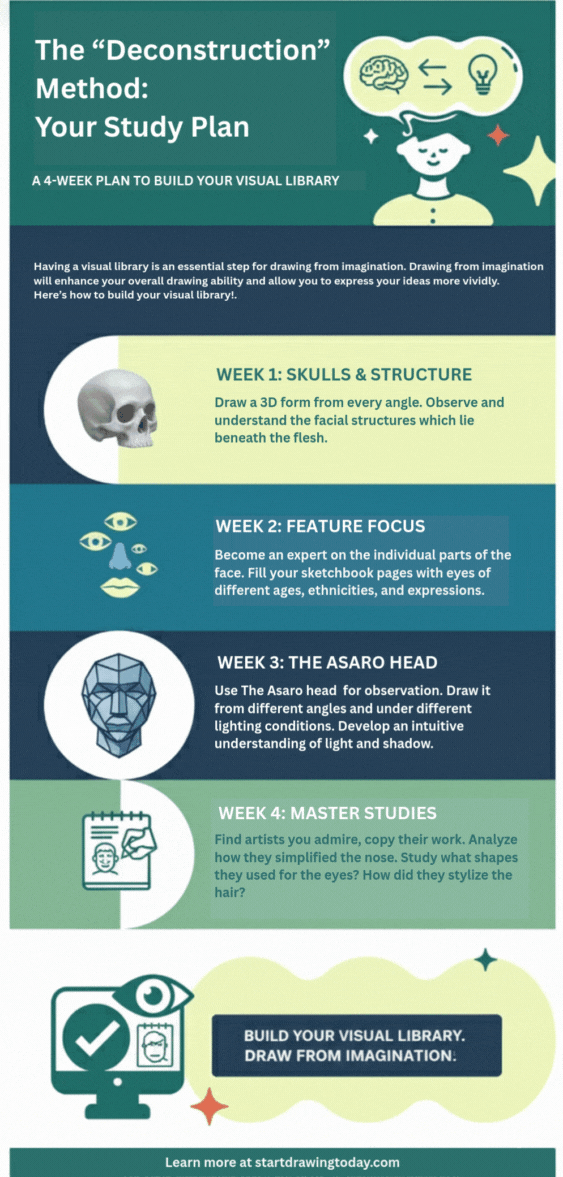
Here is a 4-week plan to start building your library with purpose. Having a visual library is an essential step for drawing from imagination:
•Week 1: Skulls & Structure: Before you can draw flesh, you must understand the bone beneath. Get a 3D model of a skull (there are great, free apps for this) and draw it from every conceivable angle. Skeletal structure is the foundation everything else is built upon.
•Week 2: Feature Focus: Dedicate entire practice sessions to single features such as spending a day drawing nothing but noses. Additionally, fill your sketchbook pages with eyes of different ages, ethnicities, and expressions. Do the same for mouths and ears. Don’t try to draw a full face; just become an expert on the individual parts.
•Week 3: The Asaro Head: The Asaro head is a famous sculptural tool that simplifies the head into a series of flat planes. Use this tool for observation and draw it from different angles and under different lighting conditions. As a result, you will develop an intuitive understanding of how light and shadow illuminate and reveal the form of the head.
•Week 4: Master Studies: Find artists you admire who are masters of character design and copy their work. But don’t just copy; analyze. For example, how did they simplify the nose or what shapes did they use for the eyes? How did they stylize the hair?
Step 2: Internalize the Structure – The Power of Construction
If your visual library is your vocabulary, then construction methods are your grammar. Remarkably, they provide the underlying rules that allow you to assemble your vocabulary into coherent sentences.
The Loomis Method as Your “Default” Head For Drawing From Imagination
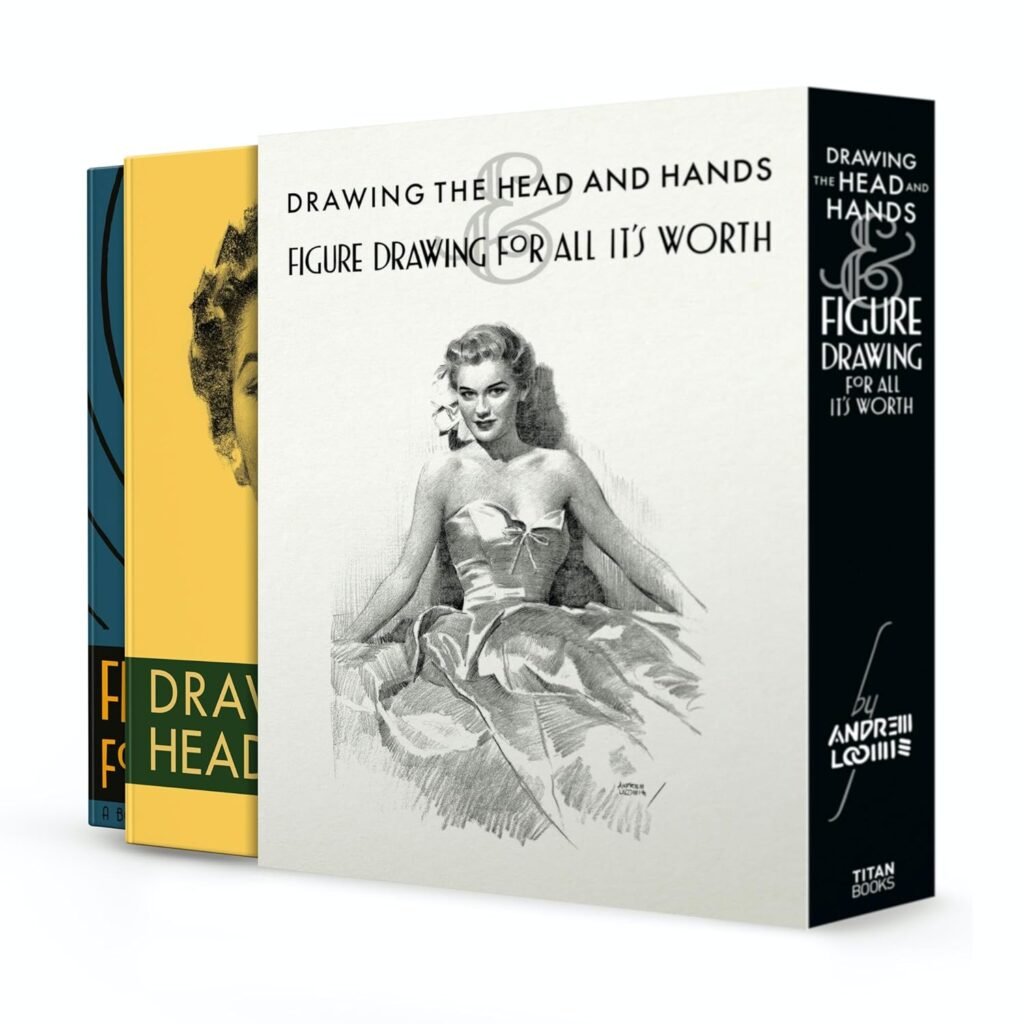
The Loomis method is the perfect starting point for drawing from imagination. It teaches you to construct a well-proportioned head from any angle by starting with a simple ball and a cross. Practice this method until it becomes second nature. This will be your “default” head, the basic scaffold upon which you can build any character.
From Sphere to Character: How to Modify the Basic Structure
Once you’ve mastered the basic Loomis head, you can start to play around with the features of your portrait. This is where shape language comes in. If you would like to create a strong, heroic character then give them a square, angular jaw. Perhaps you might have a friendly, approachable character in mind. If so, approach drawing from memory by using soft, round shapes. When you want to create a villainous character try sharp, triangular forms. By modifying the basic construction, you can create endless variations and archetypes.
Step 3: The “Frankenstein” Method – Your First Foray into Imagination
Learning to combine various elements as an artist is the bridge between relying on references and true creation. Moreover, t’s about taking what you’ve learned and starting to mix and match.
Combining and Altering References
Here’s a fun exercise for drawing from imagination. Firstly, find three different reference photos. Secondly, take the eyes from one, the nose from another, and the mouth and jawline from the third. Thirdly, try to combine them into a single, cohesive portrait. This forces you to solve problems and make adjustments, rather than just blindly copying.
Exaggerate and Stylize
Take a normal reference photo and intentionally push it as if your purpose was to create a caricature. For example, if the person has large eyes, make them even bigger. If they have a sharp chin, make it razor-sharp. This exercise breaks you out of the habit of slavish copying and gives you permission to be an artist, to interpret reality rather than just record it.

Step 4: The Test Run – Drawing from Memory
Now it’s time to test your recall and see what you’ve truly absorbed into your visual library.
The 30-Second Glance Exercise For Drawing From Imagination
To begin, choose a reference photo of a face. Next, look at it for just 30 seconds, actively observing the key shapes and relationships. Then, hide the photo and try to draw the face from memory. Don’t worry about detail; focus on capturing the big shapes and the overall gesture by drawing from imagination.
Analyze, Correct, and Repeat
Once you’ve finished your memory drawing, bring the reference back out and compare both side-by-side. What did you get wrong? Was the forehead too short? Were the eyes too far apart? Don’t get discouraged because this is valuable data! Now, go back and specifically study the area you got wrong. Then, try the 30-second exercise again. Each time you do this, you are strengthening your mental database.
Step 5: True Creation – Letting Go of the Leash
This is where all your hard work pays off in your goal of drawing from imagination. Hence, you are able to face the blank page, not with fear, but with a library of knowledge and a toolbox of skills.
Start with an Idea, Not a Face
Don’t sit down to “draw a face”, sit down to draw a character. First and foremost, you must use your artistic imagination to start with an idea or a story. Consider this: “I’m going to draw a weary, old sea captain with a kind heart.” or “I’m going to draw a mischievous forest sprite who just played a prank.” Let the character’s personality and story guide your artistic choices. The weariness of the captain might translate to heavy eyelids and deep-set lines. The sprite’s mischief might be in the upward tilt of their eyes and a wide, toothy grin.
Embrace Imperfection and “Happy Accidents”
Your first attempt at drawing from imagination will not be perfect, which is okay! The goal is to create, to experiment, and to have fun. Sometimes, a line that you thought was a “mistake” can lead to a unique feature that defines the entire character. Bear in mind, it’s fine to let go of the need for perfection and embrace the joy of the creative process.
Conclusion
In conclusion, drawing from imagination is a marathon, not a sprint. It is the end result of countless hours of dedicated, intentional study. By systematically building your visual library, internalizing the rules of construction, and progressively testing your knowledge, you will bridge the gap between copier and creator. Most importantly, you will unchain your inner artist and finally be able to bring the incredible worlds and characters that live inside your mind to life on the page.
Your first step starts now. Dedicate just 15 minutes today to filling a page with nothing but noses. Actively observe them. Deconstruct them. Own them. Share your “nose-folio” in the comments below—I’d love to see it! And don’t forget to subscribe for more guides to fuel your artistic journey.
Leave a Reply