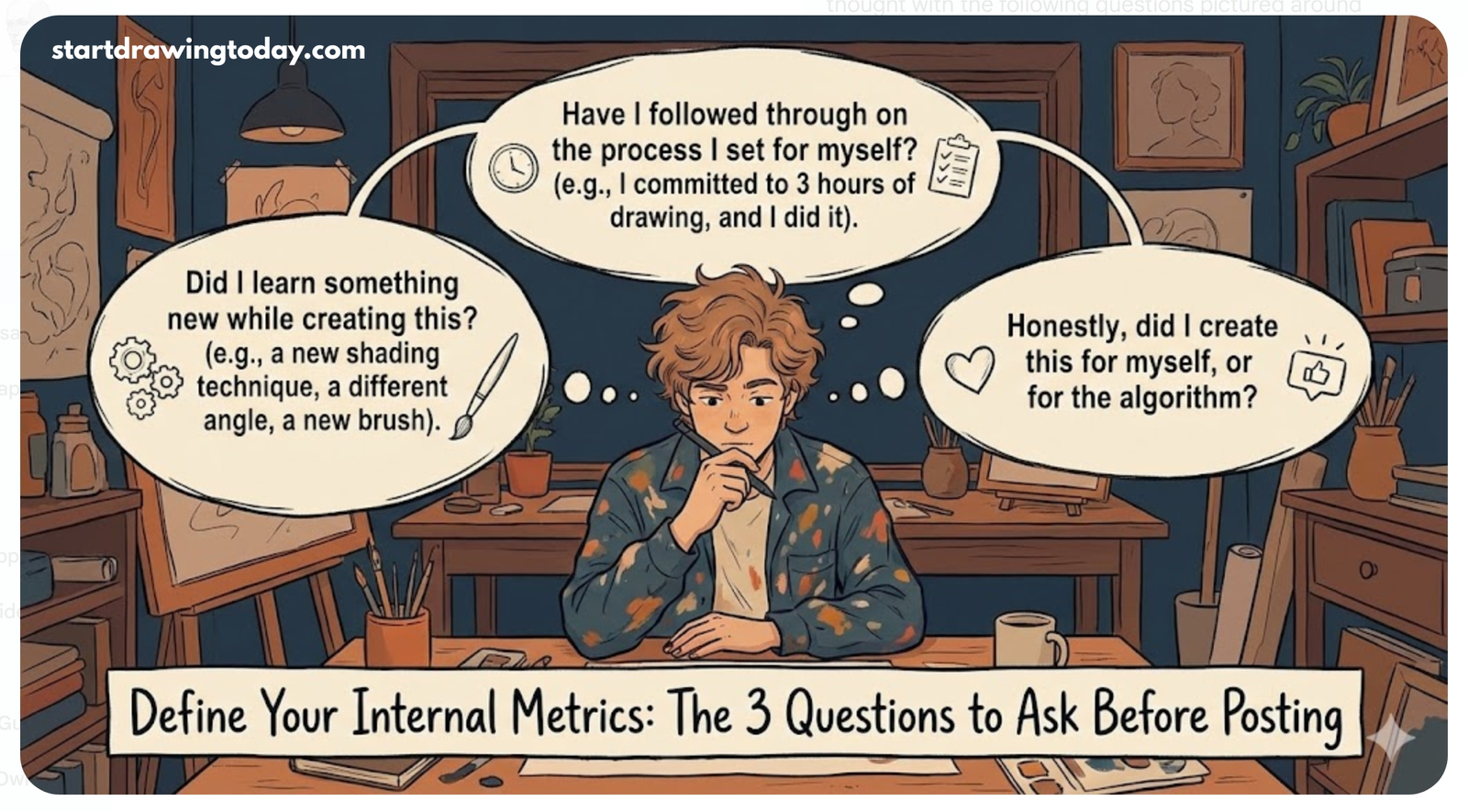
If you are an artist influenced by social media, you know the cycle: you spend hours, days, or even weeks pouring your soul into a piece of art. You post it online, and then the real work begins—the anxious, obsessive checking of the like count. When the likes don’t meet your expectations, a wave of self-doubt crashes over you. You feel deflated, wondering if you should even bother drawing anymore. I here to demonstrate to you how to not fall into the art comparison trap.
By definition, this is the art comparison trap. It’s the single most toxic habit for an aspiring artist. The need for external approval and the toxic trait of seeking art validation. Believe it or not, both are a silent killer of creativity. This guide is by me, an artist who has navigated this exact struggle. I will use an Entity-First approach to break down the five critical mistakes you are making. Most of all, I’ll show you how to finally unlock true power of self-control and confidence. We need both as artists in the age of social media.
The Psychology of the Art Comparison Trap (The Dopamine Entity)
The first step in learning how to stop seeking art validation is understanding why we do it. It’s not a moral failing; it’s a biological one. As you learn to overcome this biological issue, it will help your journey of learning how to draw faces.
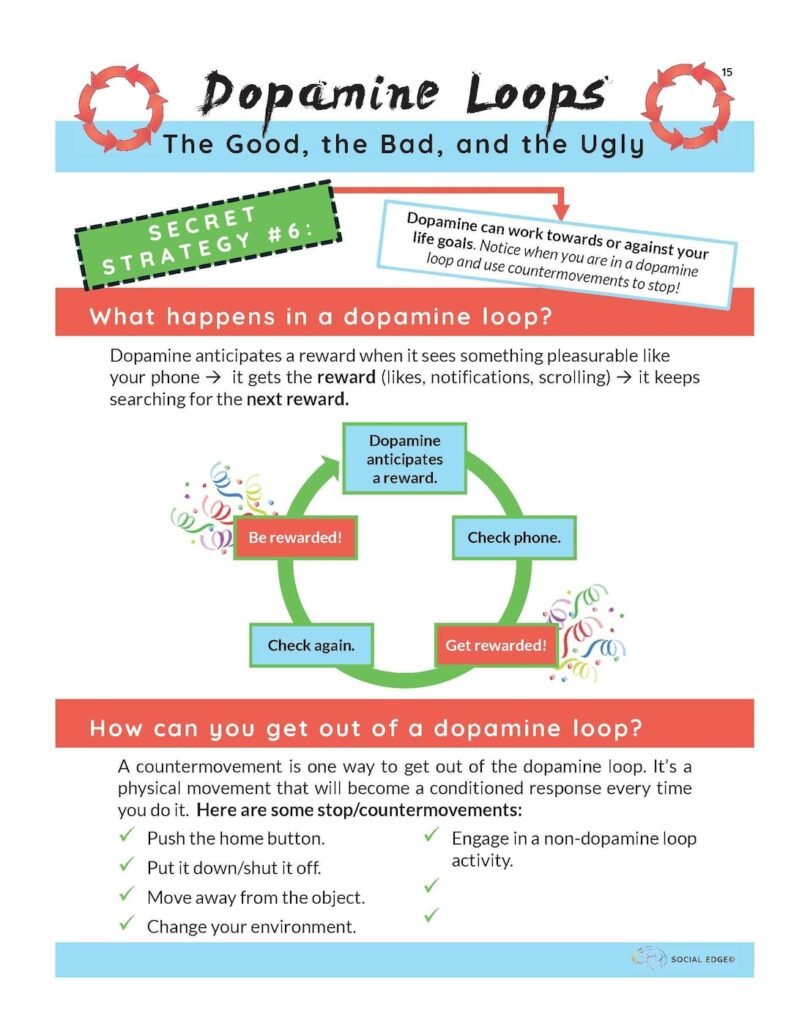
Why Your Brain Craves the Like Button (Dopamine Loop)
The “like” button is a variable reward system—the same mechanism that makes slot machines addictive. When you post art, your brain releases a small hit of dopamine when you get a notification. This chemical reward reinforces the behavior of posting and checking. Consequently, the more you rely on this external hit, the weaker your internal motivation becomes. Hence, the Dopamine Entity is a powerful force and recognizing it is the first step toward breaking the cycle.

The Art Comparison Trap: How Social Media Skews Reality
In a nutshell, social media is a curated highlight reel. Truthfully, you are comparing your messy, in-progress reality to someone else’s polished, final product. This leads directly to the Imposter Syndrome Entity. I.S.E. is where you feel like a fraud because your work doesn’t measure up to the standards of the algorithm. Not to mention, social media presents a major obstacle in how to stop seeking art validation.
Phase 1: Rewiring Your Metrics (The Self-Worth Entity)
The most practical way to learn how to stop seeking art validation is to replace external digital metrics. These metrics include likes and comments. On the contrary, replace these metrics with internal ones (such as effort, learning). I’m big on encouraging others and making them aware of how to rewire themselves. I believe you need to control social media instead of letting social media control you.
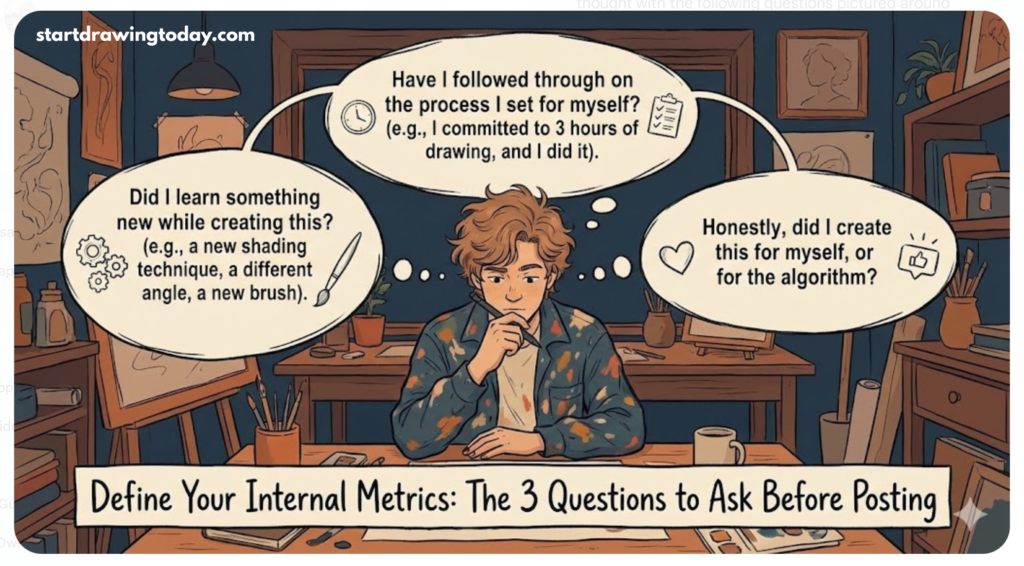
Define Your Internal Metrics: The 3 Questions to Ask Before Posting
Before you upload a piece of art to your social media account, answer these 3 questions honestly. Secondly, ensure that your self-worth as an artist is tied to the answers, not the resulting engagement. Ask yourself the following:
- Did I learn something new while creating this? (e.g., a new shading technique, a different angle, a new brush).
- Have I followed through on the process I set for myself? (e.g., I committed to 3 hours of drawing, and I did it).
- Honestly, did I create this for myself, or for the algorithm?
Afterwards, you shift your energy from a passive recipient of approval to an active agent of your own growth. This is the core of building your artistic self-worth.

The Process Journal: Tracking Effort, Not Outcome
To build genuine expertise and experience as an artist, you need data. Start a “Process Journal” by using either a digital one or a physical notebook. For every piece of art, log these details:
- The goal of the piece (e.g., “Mastering the planes of the face”).
- The time spent on each stage of the art, from the sketch/idea to the final artwork.
- The biggest challenge you overcame in the process of creating your art.
- The one thing you learned from creating that artwork.
Moreover, this journal serves as irrefutable proof of your dedication. When self-doubt creeps in, just look back in your journal and see your progress. Self-reflection of your own results is far more validating than any comment section. This is a practical step in learning how to stop seeking art validation.

Phase 2: Building a Bulletproof Artistic Voice (The Confidence Entity)
Developing a strong artistic voice also develops your resistance for the need to receive external validation. Reason being, a strong artistic voice is rooted in authenticity, focus and confidence.
The 90/10 Rule: How to Avoid The Art Comparison Trap by Changing Your Audience
Dedicate 90% of your art to personal growth, experimentation, and drawing for yourself. In contrast, only 10% should be dedicated to sharing online.
- The 90% (The Lab): Here is when you can make mistakes, experiment and try new techniques without the pressure of performance. Allow yourself to be free and designate this time to discover where your true style develops. This is a cool time to practice drawing from imagination as you create sketches to flesh out the ideas for a final artwork.
- The 10% (The Gallery): This is the small fraction of the time you dedicate to sharing your work online. Because you know the 90% is safe, the 10% becomes a celebration of your process, not a desperate plea for approval.
Therefore, by prioritizing drawing for yourself, you naturally weaken the toxic trait of seeking art validation.
The Power of “Ugly” Art (The Authenticity Entity)
Perfectionism is often validation-seeking in disguise. Instead, give yourself permission to create “ugly” art once in a while rather than being “perfect”. In fact, the most authentic and unique artistic voices are often those that embrace their flaws and quirks. Furthermore, the moment you stop trying to create what you think others want to see, you begin to create what only you genuinely feel. Genuine self-expression is the foundation of a confident artistic voice. Plus, that authentic form of expression is most potent while drawing from memory.

Phase 3: Finding Genuine Connections (The Community Entity)
The goal is not to eliminate connection, but to upgrade the quality of that connection. In other words, be more patient and select your art communities with scrutiny.
The Power of the Small Critique Group
Large public forums are great for exposure, but terrible for genuine feedback. Instead, seek out a small, private group (3-5 artists) who are at a similar stage and share similar goals. The small crit group model is how I’ve received most of my art education. I can’t recall a time when the critique group was large, like the vast space of the internet.
- Genuine Feedback: These groups provide specific, actionable critiques that help you grow, which is the only validation that truly matters.
- Accountability: They hold you accountable to your internal metrics, not some unrealistic social media algorithm.
Consequently, this shift from a large audience to a private, smaller one supports how to stop seeking art validation. As a result, you’re on your way to receiving genuine feedback from a supportive art community.
Recommended Resources for Avoiding The Art Comparison Trap
Provide a direct solution to avoiding the art comparison trap with these product recommendations:
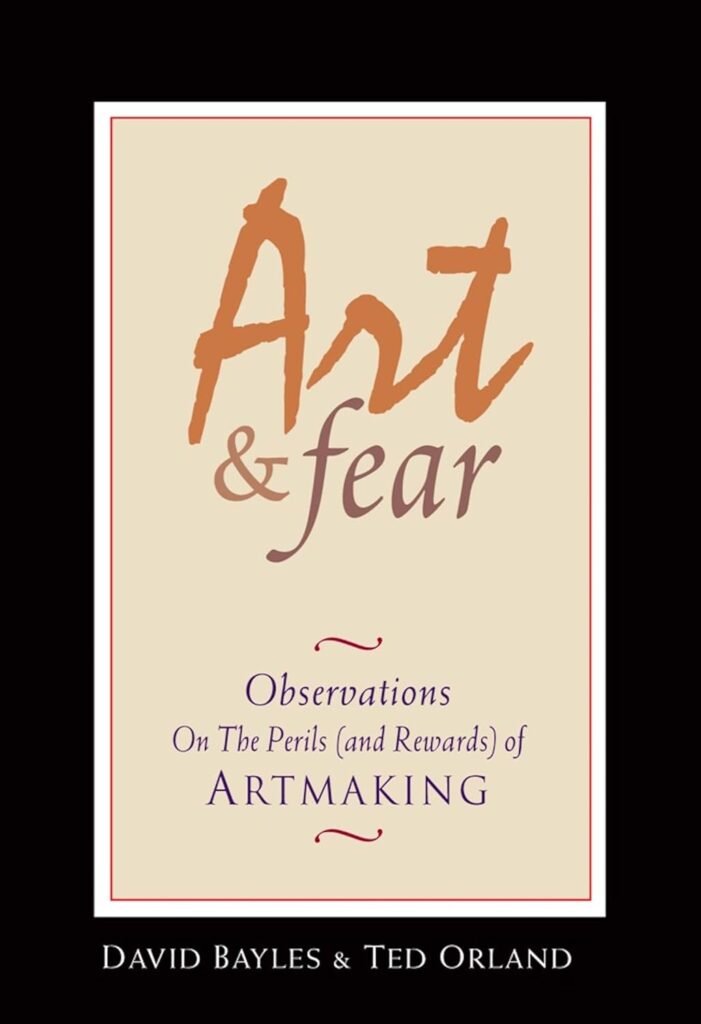
- Mindset Book: Art & Fear: Observations on the Perils (and Rewards) of Artmaking (Amazon) – The definitive book on overcoming art anxiety and self-doubt.
- Process Tool: A high-quality Moleskine Art Sketchbook (Dick Blick) – Essential for starting your Process Journal and tracking effort, not outcome.
- Confidence Course: A comprehensive course focused on creative freedom and overcoming blocks (Alison.com) – To master the Confidence Entity and build artistic self-worth.
Final Thoughts: The Bulletproof Artistic Voice
Learning how to stop seeking art validation is the most important skill you will ever develop as an artist. It frees your creativity from the constraints of the algorithm and allows you to pursue the work that truly matters to you. Your artistic voice is bulletproof when its worth is determined by the effort you put in, not the likes you receive. Now, close the social media tab, open your sketchbook, and draw for your self satisfaction!