More Than a Face: A Guide on How To Draw Emotions
A technically perfect portrait that says nothing is a beautiful failure to some people. On the other hand, a simple, messy sketch that evokes a powerful emotion is a masterpiece to a different audience. As a portrait artist, your goal is not just to replicate a face, it’s to capture a soul. But so often, we get trapped in the technical details and spend hours getting the proportions right and the shading smooth. Eventually, we step back and find we’ve created a perfect drawing of an emotionless doll. The likeness is there, but the life is gone. I’m here to break this pattern by showing you how to draw emotions.
How To Draw Emotions: Realize Your Artistic Avatar
If you’re frustrated by drawing lifeless mannequins, it’s time to change your artistic avatar. You are not just a draftsman. In fact, you are a director, an actor, and a cinematographer, all in one plus a visual storyteller. Creating an emotional portrait is not an accident; it’s an act of deliberate construction, using a specific set of tools to guide your viewer to a specific feeling. My guide will hand you that storyteller’s toolkit. As a result, you will go beyond just drawing faces to creating portraits that are rich with emotion, mood, and narrative.
Part 1: The Actor’s Craft – Mastering the Nuances of Expression
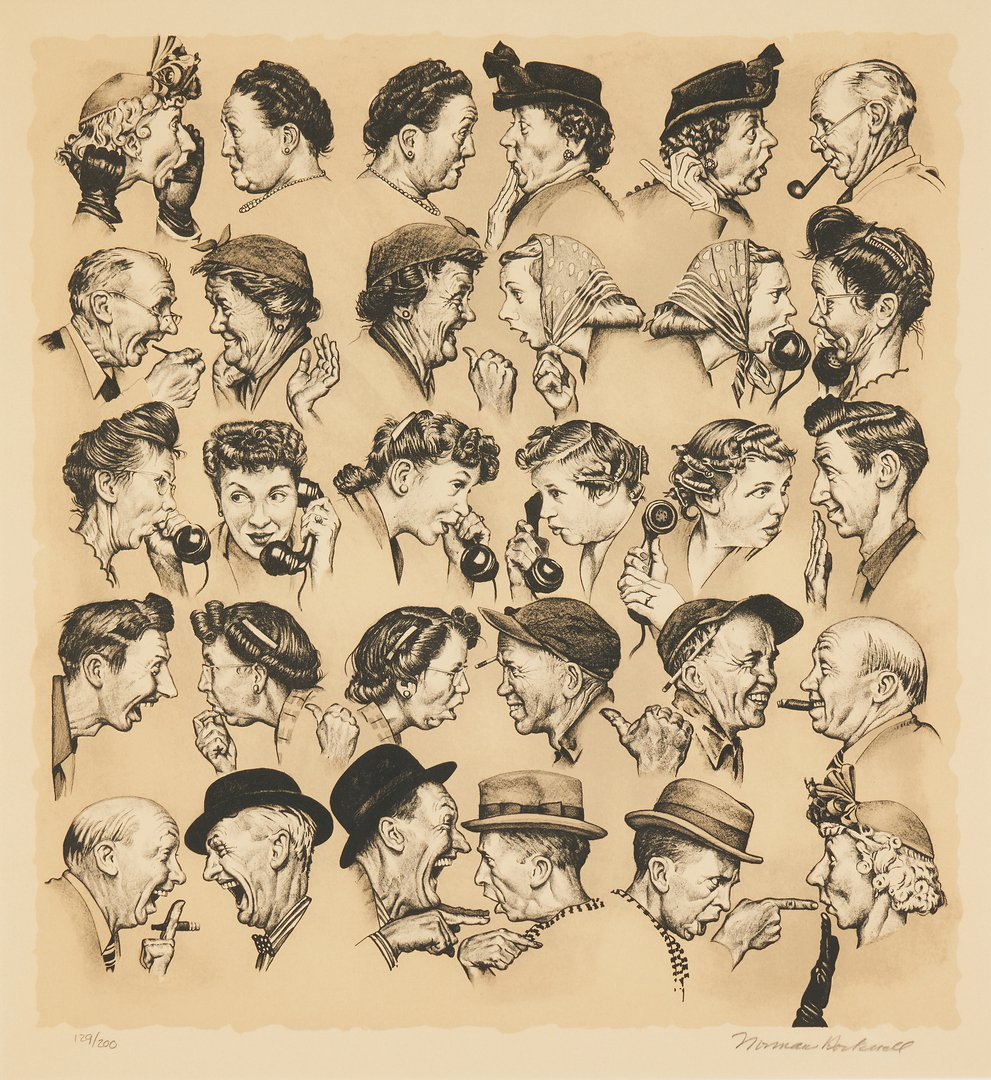
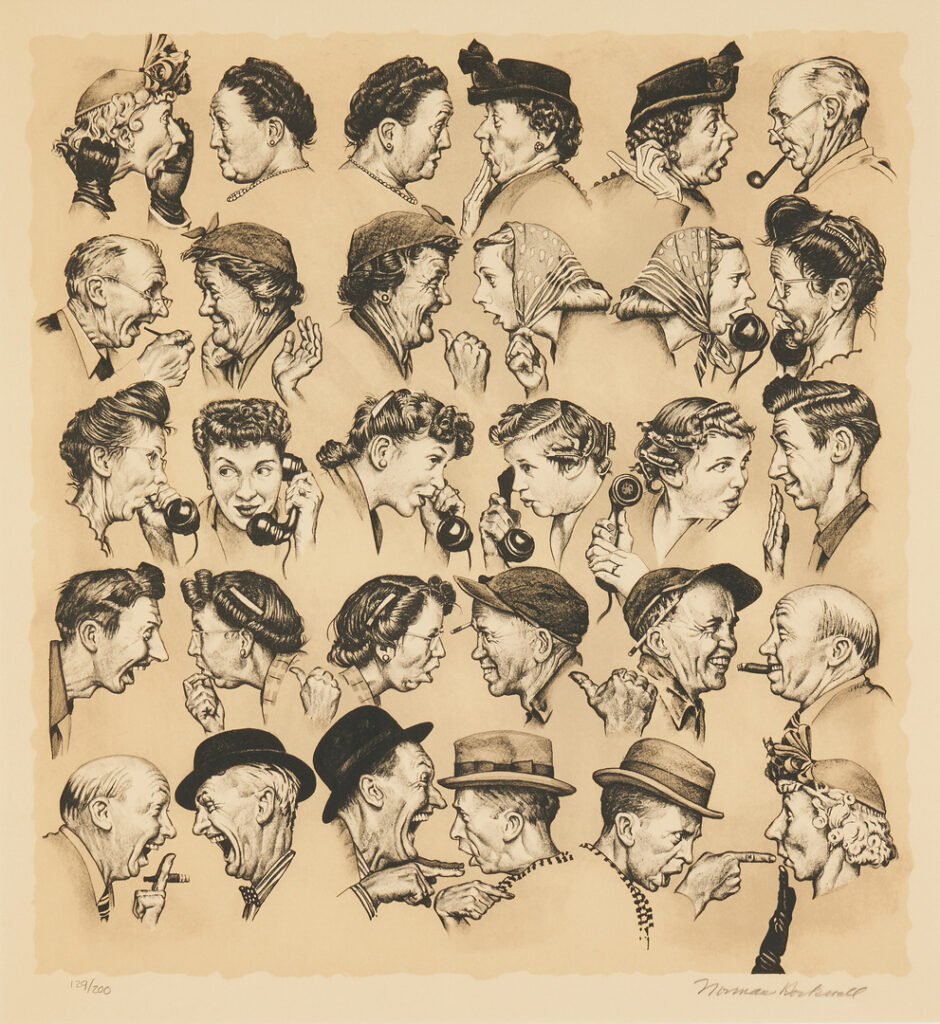
In order to truly capture the emotional nuances of the face, we as portrait artist must adopt the mentality of an actor. As the actor, your job is to understand and direct emotion within the facial expression of your subject. This goes far beyond the six basic emotions you learned in school. Real human feeling is subtle, complex, and often contradictory. One of my personal favorite artists to convey emotion in drawing the face: Norman Rockwell. I’m especially fascinated by his numerous sketches where he carefully pre-visualizes his paintings, such as the one pictured above.
Beyond the “Six Basic Emotions”: The Power of Micro-expressions
Beginner artists often make the mistake of drawing a “smile” or a “frown.” But genuine emotion lives in the micro-expressions. Moreover, a real smile isn’t just an upturned mouth; it’s the crinkling at the corners of the eyes (the “Duchenne smile”). For example, a person trying to hide their sadness might have a tight, forced smile, but the tension in their jaw and the sorrow in their eyes will betray them. Your job is to become a detective of these subtleties. Therefore, look for the slight furrow of the brow, the gentle parting of the lips, the flare of a nostril. These are the details that transform a caricature of an emotion into a genuine feeling.
The Eyes Are the Script: How To Draw Emotions Through the Gaze
The old cliché is true: the eyes are the windows to the soul. They are the focal point of your story, and the direction and quality of the gaze can change the entire narrative. Is the character’s gaze direct, engaging the viewer in a confrontation or an intimate connection? Or, Is it averted, suggesting shyness, shame, or distraction, possibly looking up in hope or down in despair? Perhaps they looking at something just outside the frame, inviting the viewer to wonder what it is? Basically, the story of your portrait drawing begins in the direction that the eyes are looking.
The “FACS” for Artists: A Simplified Guide to Facial Muscles
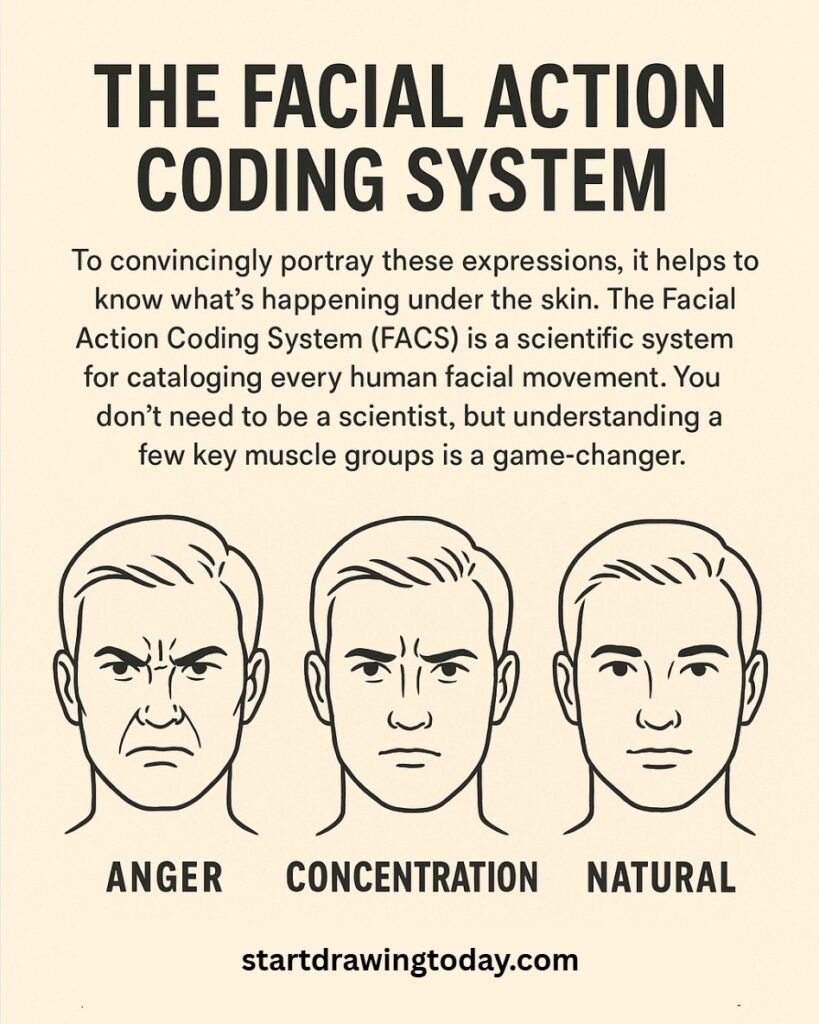
To convincingly portray these expressions, it helps to know what’s happening under the skin. The Facial Action Coding System (FACS) is a scientific system for cataloging every human facial movement. Honestly, you don’t need to be a scientist, but understanding a few key muscle groups is a game-changer. For example, knowing that the corrugator supercilii muscles pull the eyebrows together and down in anger or concentration allows you to draw that expression with more anatomical conviction. It’s the difference between copying a shape and understanding a form. He or she who understands form has a powerful tool in understanding how to draw emotions.
Part 2: The Cinematographer’s Eye – Using Light and Color to Create Mood
Cinematography is part of your artistic vocabulary even though you might not necessarily hold that title as an artist. In definition, the cinematographer (and visual artist) controls the emotional atmosphere of the scene. Furthermore, your use of light and color are key elements in learning how to draw emotions.
The Language of Light: How To Draw Emotions With Hard Light vs. Soft Light
You can control how the subject of your portrait is lit by using numerous lighting situations. The quality of your light source has a profound psychological effect. Hard light, which creates sharp, well-defined shadows (like direct noon sunlight), produces a feeling of drama, tension, and harsh reality. It can be used to make a character look strong, intimidating, or exposed. On the other hand, soft light, which creates gentle, diffused shadows (like on an overcast day or light from a large window), produces a feeling of softness, intimacy, peace, or melancholy.
Lighting Patterns for Story: Rembrandt, Split, and More
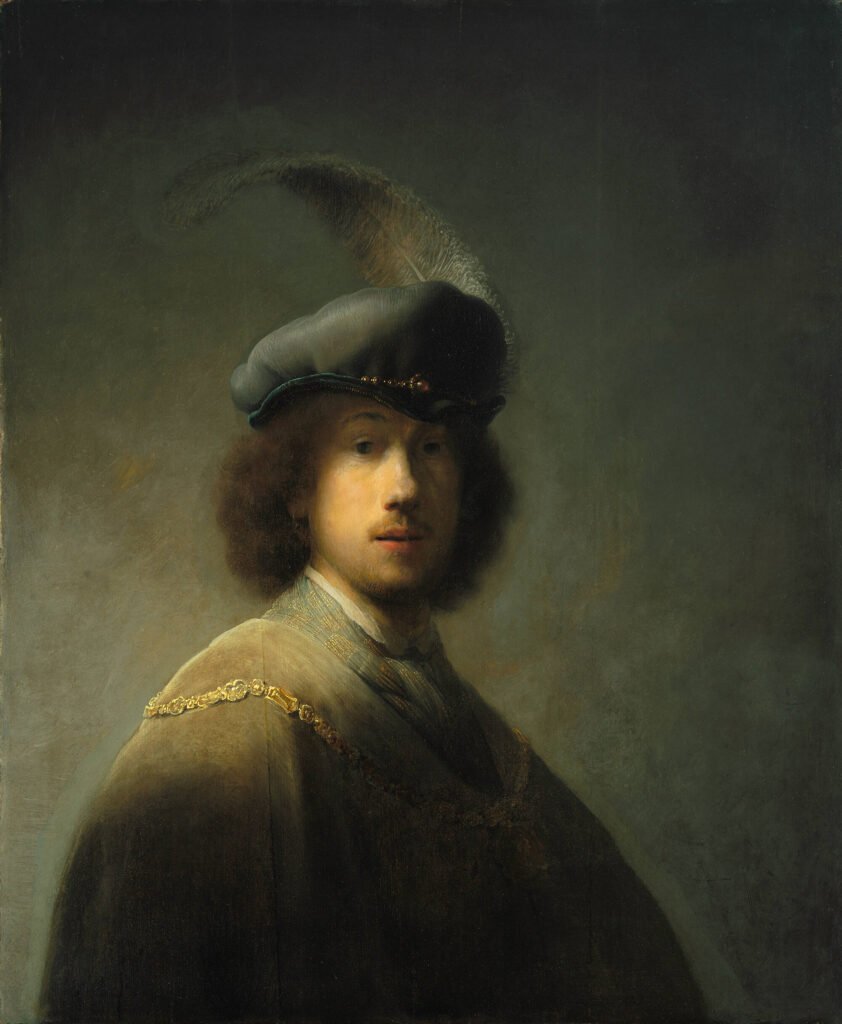
How you place that light also tells a story. By example, a few classic cinematic lighting patterns can be powerful narrative shortcuts:
•Rembrandt Lighting: Characterized by a triangle of light on the cheek opposite the light source, this creates a dramatic, moody, and introspective feeling.
•Split Lighting: This splits the face directly into one half in light and one in shadow. It’s perfect for creating a sense of conflict, duality, or mystery.
•Butterfly Lighting: Named for the butterfly-shaped shadow it creates under the nose, this is a classic glamour lighting that tends to be flattering and creates a feeling of beauty and serenity.
The Psychology of Color: Warmth, Coolness, and Saturation
Color is pure emotion, I study them often in nature especially when being stuck on the NYC subway. Warm colors (reds, oranges, yellows) can feel energetic, passionate, happy, or aggressive. Cool color palettes (blues, greens, purples) can feel calm, sad, isolated, or serene. Saturation dictates the intensity or lack of (dullness) in a color. In other words, highly saturated colors feel vibrant and intense. But desaturated, muted colors feel more somber, subtle, and realistic.

Part 3: The Director’s Vision – Composition and Body Language
As the director of your picture, your final vision should be meaningful. The story is not just in the face; it’s in how the face is presented and what the rest of the body is doing. One of my favorite artists who meticulously directs the composition and body gestures of their pictures is William Bouguereau. So, like William use the opportunity to create an interesting frame, one that shows your ability of how to draw emotions.
Compositional Storytelling: Framing, Angles, and Negative Space
How you frame your subject has a huge impact on the story. A tight close-up can create a feeling of intimacy or, conversely, claustrophobia. A low-angle shot, looking up at the subject, makes them feel powerful and dominant. In contrast, a high angle shot, looking down, can make them seem small and vulnerable. The amount of empty space (negative space) around your subject can also convey loneliness and isolation, or freedom and peace. With that said, utilize your framing, angles and negative space to the utmost.
The Unspoken Dialogue: The Role of Hands and Posture In How To Draw Emotions
Never underestimate the storytelling power of hands. Are they clenched in a fist of rage or delicately touching the face in a moment of thought? Or are the hands held up defensively? Throughout history, art shows that the hands can often tell a more honest story than the face. The same is true of posture and a character with an open, upright posture feels confident and receptive. Posture can also show that someone who is hunched over with their arms crossed feels defensive, cold, or insecure.
Environmental Clues: Using the Background to Add Context
Your background is not just dead space; it’s a supporting character in your story. Surprisingly, a dark, ambiguous background can create a sense of mystery and timelessness, focusing all the attention on the subject. A detailed, cluttered background—a messy bedroom shows confusion. Conversely, a bookshelf filled with specific titles—can tell the viewer a huge amount. Moreover, it conveys important information to the viewer about the character’s life, personality, and circumstances.
Part 4: The Story Prompt – Your Pre-Production Process
Let’s put this all together into a practical, pre-drawing exercise. Like all of my drawing techniques, having a good plan is the best way to learn how to draw emotions.
Don’t Start with a Face, Start with a Sentence
Before you draw a single line, write one simple sentence that encapsulates the story you want to tell. Most importantly, this sentence is your creative North Star. For example:
“An old man sits by a fire, remembering a long-lost love.”

The Start Drawing Today Checklist Of How To Draw Emotions
Secondly, based on that sentence, make a conscious choice for each of your cinematic tools:
•Emotion: Identify the mood of your subject beyond just a simple generalization, don’t just use the word “sad,” but more specific. Let’s say, “wistful nostalgia”—a mix of warmth from the memory and sadness from the loss.
•Lighting: What light supports this? “The warm, flickering, soft light from the fire” would be perfect as a description that creates intimacy and warmth.
•Color: How about the palette? Dominated by warm oranges, reds, and deep shadows, with perhaps some cool blues in the background to represent the coldness of the present.
•Composition: Here’s where you choose how to frame your portrait. For instance, “a close-up on his face, with his eyes looking away, into the middle distance (into his memory)”.
•Body Language: Examine what your subject is actually doing. A slight, gentle smile on his lips, but his eyes are glistening or a hand is resting on an empty chair next to him.
Thirdly, when you start drawing, you are not just copying a face. You are telling a specific, emotionally resonant story that shows you know how to draw emotions.
Conclusion: How To Draw Emotions
In conclusion, creating a portrait that feels alive is not an accident, it is the result of a series of deliberate, thoughtful choices. Above all, you are the actor, channeling the subtle truth of an emotion and the cinematographer, painting the scene with light and color. Furthermore, you are the director, weaving all these elements together to tell a compelling story. When you embrace these roles, you move beyond being a mere draftsman. You become a visual storyteller, and your portraits become more than just faces, they become windows into the human heart.
Let’s start now. Write one sentence in the comments below that describes a story you’d like to tell. Then, tell us what lighting and color choices you would make to bring that story to life. Let the drawing with emotion begin!
Leave a Reply